Blog
Insights on web optimization, Google Ads, web performance, and digital marketing strategy.
php2shell: Patching 66 PHP Sites, and Why 12 Others Needed Nothing
PHP shipped fixes for two remote code execution bugs on October 21, 2026. We patched 66 hosted sites that day. Twelve more needed nothing, because we had rebuilt them as static HTML in August, and the server logs show what that rebuild changed.
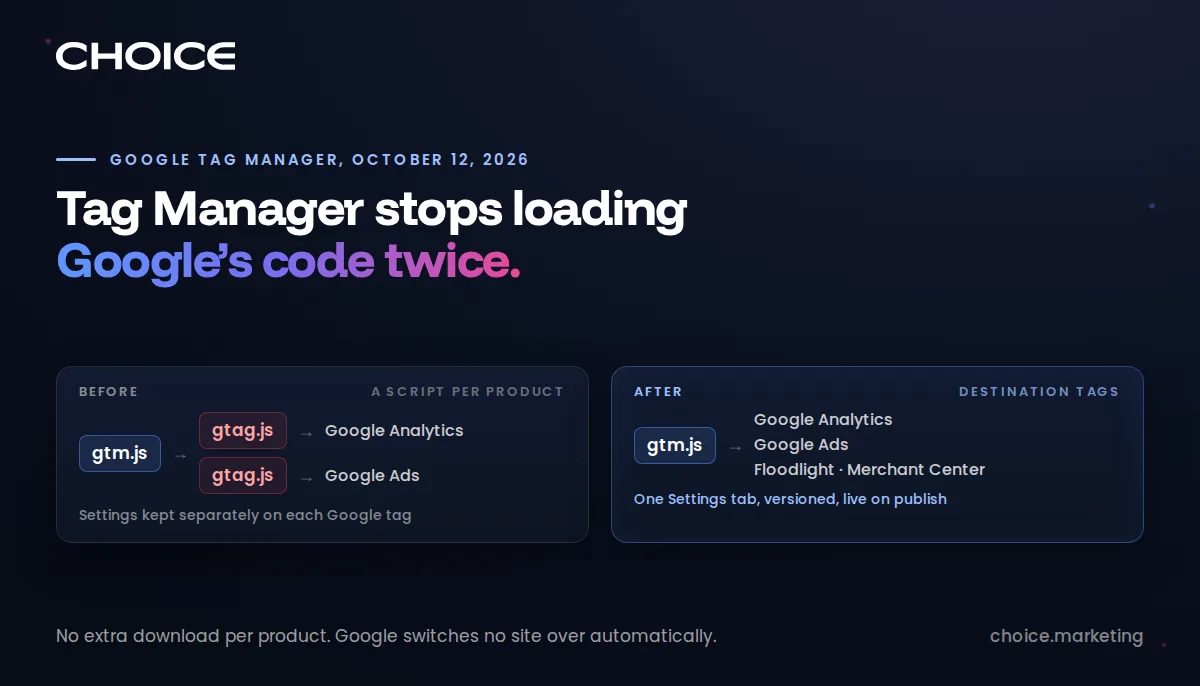
Google Tag Manager Drops the Extra Script: What Destination Tags Change
Since October 12, 2026, Google Tag Manager can send data to Google Analytics, Google Ads, Floodlight and Merchant Center without loading a separate gtag.js file. The upgrade is optional, and it moves every privacy setting into one versioned place.

Caught in the Crossfire: How an AI Bot Racked Up a 10.5TB Streaming Bill
A crawler identifying itself as OpenAI’s GPTBot spent four days downloading lyric videos from our music project and left a $749.06 CloudFront bill. How it got in, how we closed the door, and what AWS’s support bot said when we asked for mercy.
Google Ads Learns From What You Count
Google's bidding system repeats the results you call successes. Our review of 19 accounts shows why real enquiries and customer outcomes must come before new campaign types.
We Audited 19 Google Ads Accounts for September's AI Max Auto-Upgrade. The Real Exposure Was One Campaign.
Google forces AI Max changes on every eligible Search campaign between September 1 and 30, 2026. We ran the eligibility audit across all 19 accounts under our management: zero enabled campaigns on campaign-level broad match, 25 campaigns still carrying the legacy asset setting, and exactly one enabled, spending campaign in the forced-change path. The story of the audit, the three findings we did not expect, and the queries to run it on your own account.
The AI Max Field Guide: What Google Gets to Decide, and What It Has to Earn
An operator's field guide to AI Max for Search: what each component actually decides, the A-to-B spectrum we place campaigns on, the seven gates a campaign passes before Google gets more freedom, what the independent evidence shows, and what AI Max served on our own money, audited across all 19 Google Ads accounts under our management. Ships with the four-query GAQL preflight we ran, a scored readiness rubric, and a machine-readable appendix built for your AI agent.
Ask Your Agency Which AI Price It Is Paying
AI at last year's capability is 280 times cheaper than it was. AI at this year's capability is sold by spend cap and waiting list. Your agency buys both, and routing decides whether the saving reaches you. Whether the numbers in your report are real is a separate question: the worst fabrication we caught came from the flagship model. One test sorts every task into the right tier, and four questions tell you which tier your fee covers.
A Publishable Study Is Sitting Unclaimed in the AI Safety Debate
Everyone has an opinion on whether calling an AI dangerous makes it look more capable. Nobody has tested it. The adjacent literatures are strong, the manipulation is trivially cheap, and the obvious design has a confound that would sink it. The question, the surrounding evidence, the study that would settle it, and the four ways it goes wrong.
The Settings Screen Is Gone. The Setup Work Isn't.
AI tools deleted visible configuration, and the setup work moved where buyers cannot see it. The 2026 tooling market ran the experiment at full scale: easy to try, easy to cancel, and billing units that admit nobody has settled what AI value costs. We built the chain that measures conversions from AI, and we publish our own numbers, zeros included.
SEO Didn't Die. It Split in Two.
Search split into two measurable jobs. Ranking decides which page a human visits. Citation decides which passage an AI system trusts as evidence inside its answer, and as of 2026 the two are scored on separate reports. This is the map of both scoreboards: crawler access, evidence writing, local entity consistency, and honest measurement, with each lever pointed at the piece that owns it.
Citation Share Is Not Market Share
Citation Share will be the most misread number in marketing this year, and Microsoft says so in its own documentation. Added to Bing's AI Performance report on June 16, 2026, it shows the percentage of citations that point to your site out of every citation shown for the same grounding query. Microsoft states plainly that it is observational: not a ranking system, not a competitive scoreboard, not traffic share, and not a quality score. Here is exactly what it counts, the four things it does not mean, and how to watch it move without overreacting.
Ask Your Developer These 3 AI-Crawler Questions
A page can be crawled by AI bots, indexed by search engines, and still never appear in an AI answer, because crawled, indexed, and cited are three separate states. The most common reason a business is missing from ChatGPT, Copilot, Perplexity, and Google's AI answers is a technical block, not weak content: a robots.txt line, a CDN toggle, a stray noindex, or JavaScript-only text quietly blocking the AI search crawlers. You do not need to read the config to catch it. Three questions to whoever built your site surface the problem fast.

One Click, a Thousand Copies: How Advertising Technology Actually Tracks You
A single ad click sets off pixels, real-time bidding auctions, hashed-email matching and server-side pipelines that survive clearing your cookies entirely. Regulators in the EU, UK, Canada and US have each ruled against parts of this system: Belgian courts found the ad-auction consent string itself is personal data, and the FTC fined BetterHelp $7.8 million and GoodRx $1.5 million for leaking health data to advertisers. This post walks through the machinery in plain language, one stage at a time.
Stop Writing Marketing Copy. Start Writing Evidence.
Marketing copy is written to persuade a person. Evidence is written so a machine can lift one paragraph and stand behind it. AI answer engines do not choose pages, they choose passages, so every paragraph you want cited has to pass five tests: completeness, freshness, authority, attribution, and entity clarity. Here are the five questions to ask of every important paragraph before you publish.
The Local Business Checklist for Showing Up in AI Answers
Local businesses have a second grounding layer that page copy alone never reaches: the entity facts an AI system reconciles from your listings, your site's structured data, and third-party directories before it decides whose facts to trust in a location answer. Microsoft says a Bing Places listing keeps your key details eligible for inclusion in AI-generated responses. Conflicting or missing facts across your profiles give an AI system a reason to skip you. This is the checklist that makes your business's facts consistent, complete, and machine-readable.
Your About Us Page Is Costing You Customers
Your About Us page is the one page an AI system reads to learn who your business is, and most of them state nothing it can quote. AI answers are assembled from specific passages, not ranked pages, so a page full of mood copy gives an answer engine nothing to lift. We take four vague, real-shaped About paragraphs and rewrite each into one an AI can cite: a dentist, a contractor, an optometrist, and a law firm.
How to Check in 10 Minutes Whether AI Cites Your Business
You can find out whether AI systems cite your business in ten minutes, for free, with no paid tool. Two outcomes most owners treat as one come apart under the test: being named in the words of an answer, and being cited as a clickable source. The audit is three moves: put your customer's real question to ChatGPT, Copilot, Perplexity, and Google's AI Overview; open two free first-party dashboards to see what those systems already did with your pages; and record the grid the same way every month. Zero data is itself an answer.
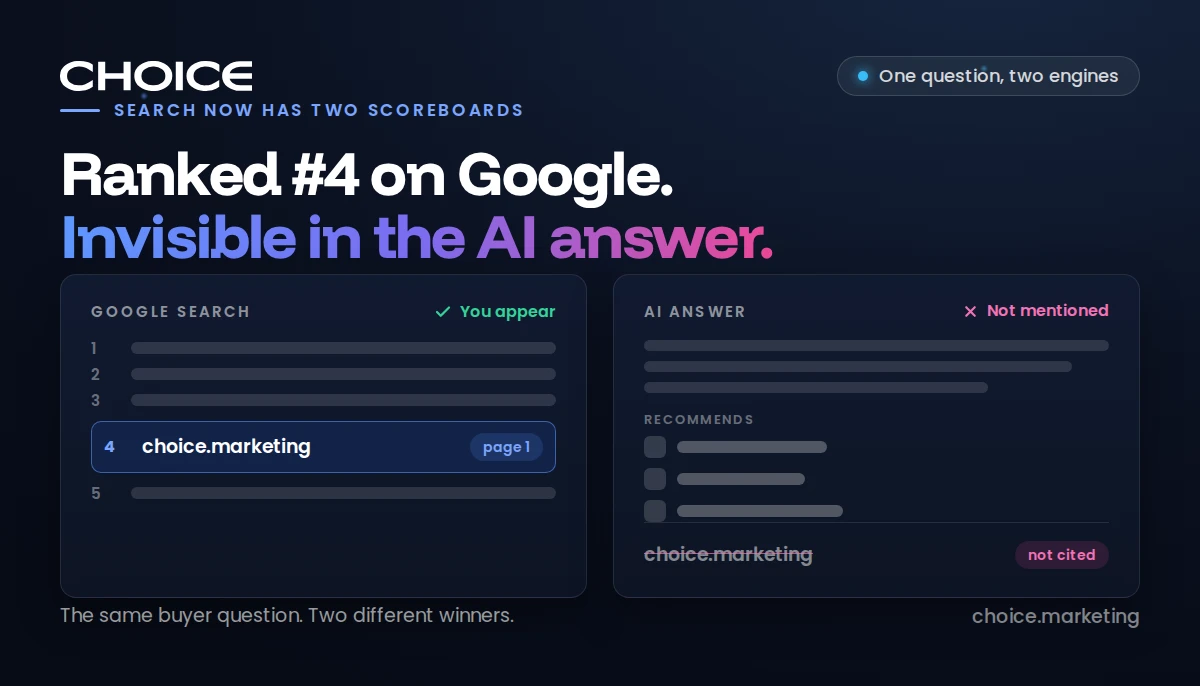
You Can Rank #4 on Google and Be Invisible to ChatGPT
Microsoft now grades websites on two separate scorecards: how well they rank in search, and how often AI systems cite them as evidence in an answer. We track the same buyer questions across Google, Google's AI answers, and ChatGPT, and the winners are different on each surface. One question we rank #4 on gets us no citation in any AI answer. This post lays out the split, the proof, and a ten-minute check for your own business.

The Meta Pixel Is a Liability on Canadian Healthcare Websites
US health systems have paid more than $30 million to settle claims that the Meta Pixel sent patient data to Facebook. The same pixel runs on Canadian practice websites today, and Canada's privacy commissioner has already found that sharing customer data with Meta without consent violates federal privacy law. What happened, why Alberta practices carry specific duties, how to check your site in five minutes, and what to run instead.
What Healthcare Practices Should Demand From a Marketing Agency in 2026
Dental and eye-care practices should judge an agency on patients booked, not traffic delivered. Five standards to demand before you sign, plus what changes for dental groups, DSOs, and optometry subspecialties.
When Your Customers Ask AI Who to Call, Is It You?
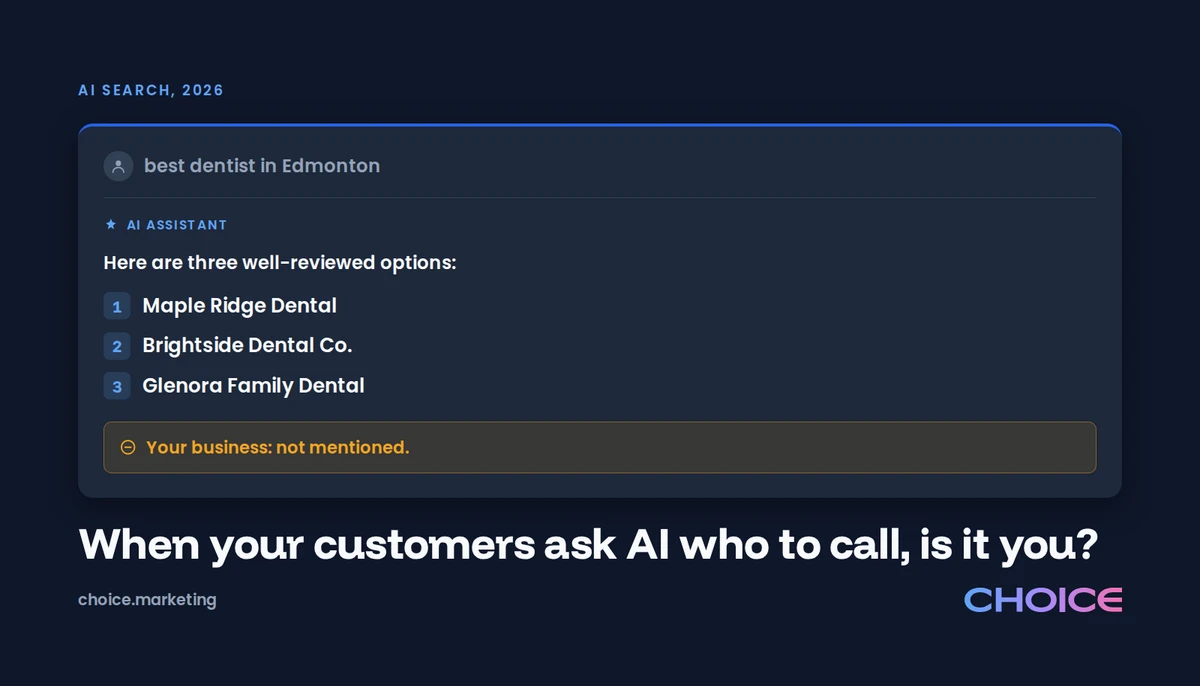
AI assistants now answer your customer's question and name one business to call. Across 28 client sites we improved rankings and earned 19% more impressions while clicks stayed flat, and AI bots read those sites 85,000+ times last month while sending 346 visits back. This post covers what AI checks before it recommends a business, and how to see what it says about yours.

What Agencies Should Measure Now That Google Stopped Sending Clicks
The definitive 2026 answer to 'what should I measure?' The click no longer anchors marketing value. This is the full metric stack we run, from AI visibility to revenue, each grounded in a primary source.
AI Overviews Are Eating Healthcare Search Traffic
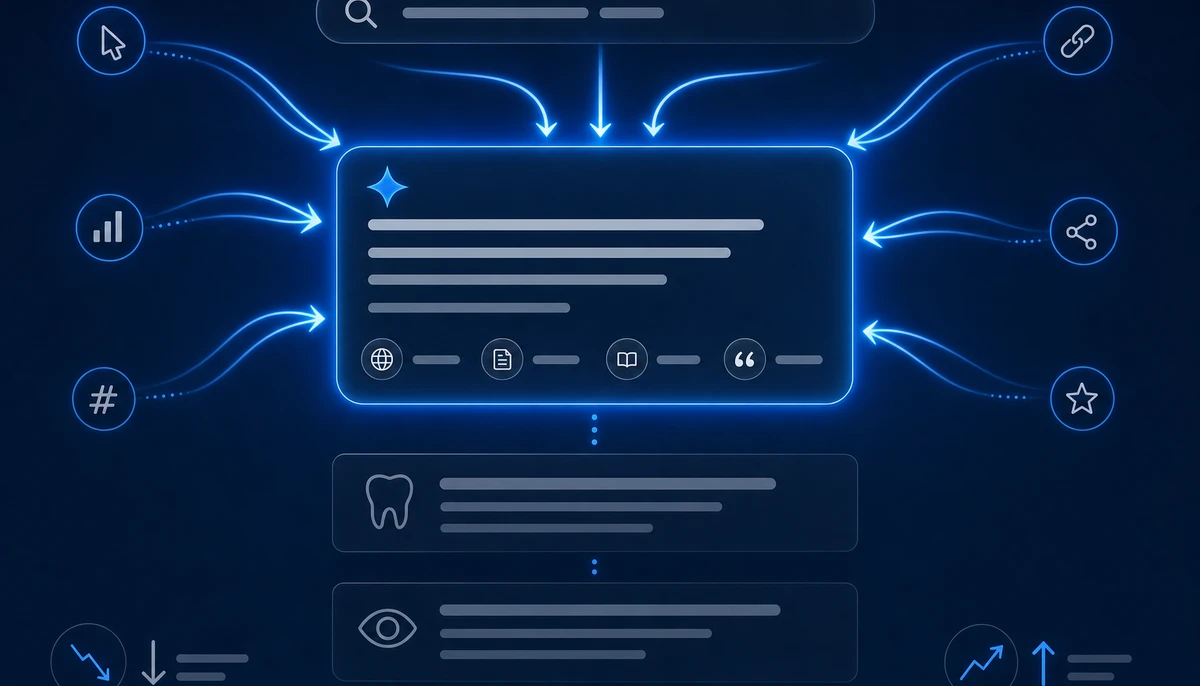
Clicks to one healthcare site fell 70% in 28 days while impressions rose and rankings improved. AI Overviews now answer patient questions on the results page. This post covers the mechanism, the data from three sites, and a 90-day citation playbook for dentists and optometrists.

The 2026 Implant Practice Operational Stack
Part 1 argued the operational model is the asset and the equity transfer is the packaging. Part 2 commits to the answer: the 2026 stack for an independent implant practice ships in 30 days from contract, is owned by the practice, runs around $5,000/month software, and replaces roughly $10K-$15K of monthly payroll in headcount.

What PE Installs at a Dental Implant Practice
Dr. Clark Damon's Texas implant practice joined Frontline DIS in late 2023. From the marketing analytics seat I watched the same operational stack PE-backed DSOs install go in around me. This post maps what they put in and where the value gets captured.
The Operating Layer: 6 Practices That Predict Website Success in 2026 (Regardless of CMS)
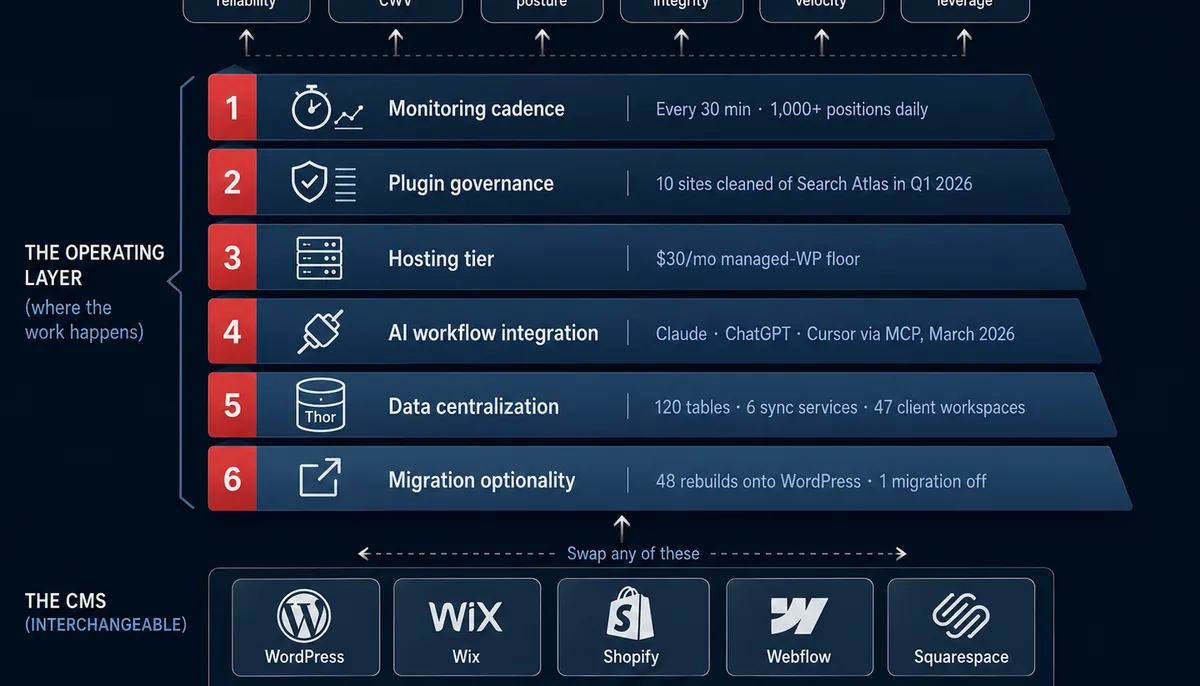
Part 2 of 2. If your CMS isn't the predictor, what is? Six operational practices we run across 79 WordPress sites, custom Go applications, and hosted builders. Pick any platform. The operating layer is what wins.
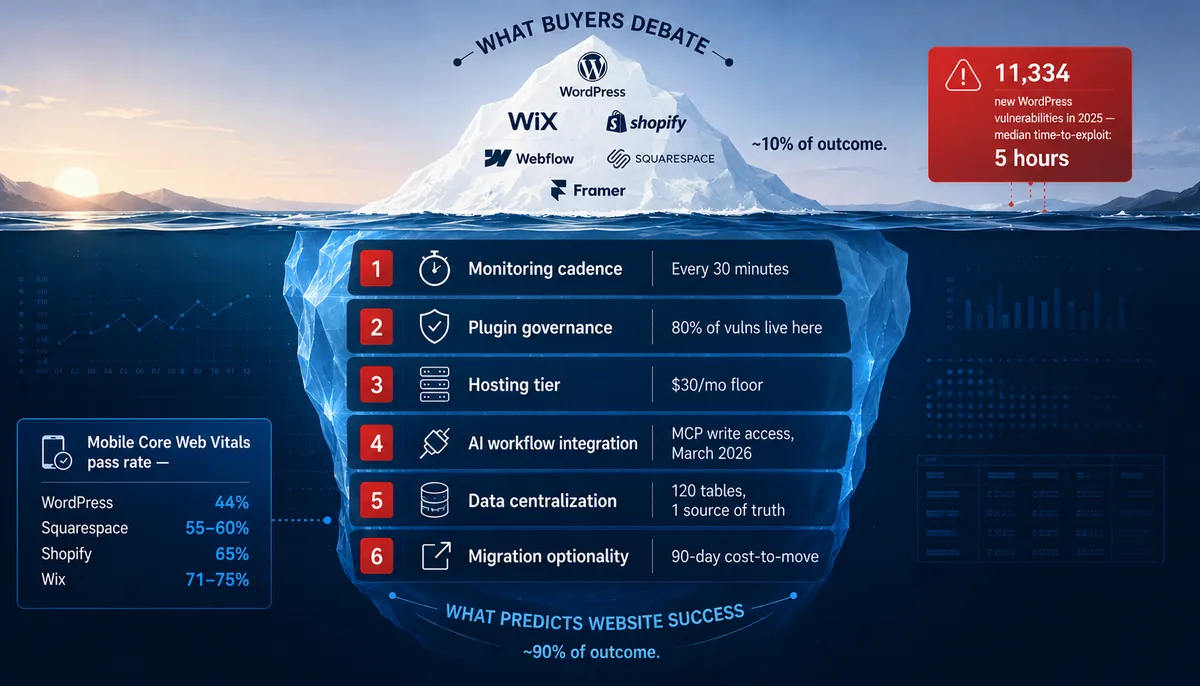
The Platform Debate Is a Distraction: 7 Myths About Choosing a Website CMS in 2026
Picking the 'right' CMS won't save a small business in 2026. We run 79 WordPress sites, 47 client reporting workspaces, custom Go applications, and hosted-builder sites in parallel. Seven myths about platform choice, and what the 2026 data actually shows.

Google Ads Split Into Three Businesses. Your Plan Should Too.
In Q1 2026 Google's three ad lines went in three directions: Search +19%, YouTube +11%, Google Network -4%. EMARKETER projects Meta will overtake Google on total ad revenue this year. Treating 'Google Ads' as one channel with one strategy is now a planning error.

ChatGPT Ads in 2026, Updated August: oCPC, Audiences, OAIQ Pixel
A planner's field guide to ChatGPT Ads, updated August 20, 2026 for the Europe expansion, the conversion-optimized objective, custom audiences, and advanced matching: auction mechanics, targeting controls, the OAIQ pixel and Conversions API, OAI-AdsBot rules, eligibility by country, what our own June test returned, and where the channel fits in a media plan.

ChatGPT Ads Are Live: The AI Answer Is the New Ad Unit
ChatGPT ads launched February 9, 2026 with sponsored placements below answers on Free and Go tiers. The targeting signal isn't a keyword; it's the entire reasoning context, and most agencies aren't built to use it.

7 Red Flags When Hiring an Edmonton Digital Marketing Agency (And What Actually Matters Instead)
Seven patterns that reliably predict a bad Edmonton marketing agency engagement (broken tracking, unwatched ad spend, locked-in contracts, and vanity reports) all trace back to the same root cause: monitoring vs. reporting.

The Google Ads Job Changed in 2026: What We Rebuilt Across 24 Accounts
Between 2025 and 2026 Google stopped shipping a toolkit and started shipping an operating system. The quiet commercial changes will hit Western Canadian SMBs before any AI-Overview headline does.

We Track Your Business Across 10 AI Platforms: What We've Found
We monitor whether clients appear in responses from Google AI Overviews, ChatGPT, Perplexity, Claude, Gemini, and five other AI platforms. The numbers are small but the baseline data matters.

Seasonal Marketing for Trades: Managing the Construction Calendar
Seasonal businesses waste money running the same campaigns year-round. We manage the full marketing calendar for trades clients, and one construction company saw 316% organic traffic growth.

From 3 Clinics to 6: Scaling Multi-Location Healthcare Marketing
Multi-location healthcare marketing fails when each location competes with itself. Centralized monitoring and location-specific strategies let us scale an optometry group from 3 to 6 clinics while reducing acquisition cost by 30%.

How a High-Value Procedure Ad Campaign Actually Works
When a single dental implant case is worth $20,000-50,000, you cannot afford imprecise tracking. We grew one practice's implant revenue from $300K to $800K by building airtight attribution.

The Real Cost of SEO in 2026: Lessons from 33 Client Engagements
SEO costs range from $1,500 to $5,000+/month depending on competitive landscape and location count. The real cost difference between agencies isn't the monthly fee.

Google Ads vs Meta Ads: Where to Spend Your First Dollar
A law firm spending $3,000/month on Meta Ads was getting fake phone numbers and low-intent form fills. We pivoted to Google Ads targeting high-intent searchers. The question is which platform matches how your customers buy.

Why We Don't Charge a Percentage of Ad Spend
Percentage-of-spend pricing incentivizes agencies to increase your spend. Flat monthly fees incentivize us to increase your results. We manage 24 Google Ads accounts on flat fees.

What Happens When Conversion Tracking Breaks (And Nobody Notices)
A conversion tracking break that goes undetected for 30 days wastes an entire month of ad spend optimization. The pipeline works in four steps, breaks in five common ways, and catching it takes automated monitoring.
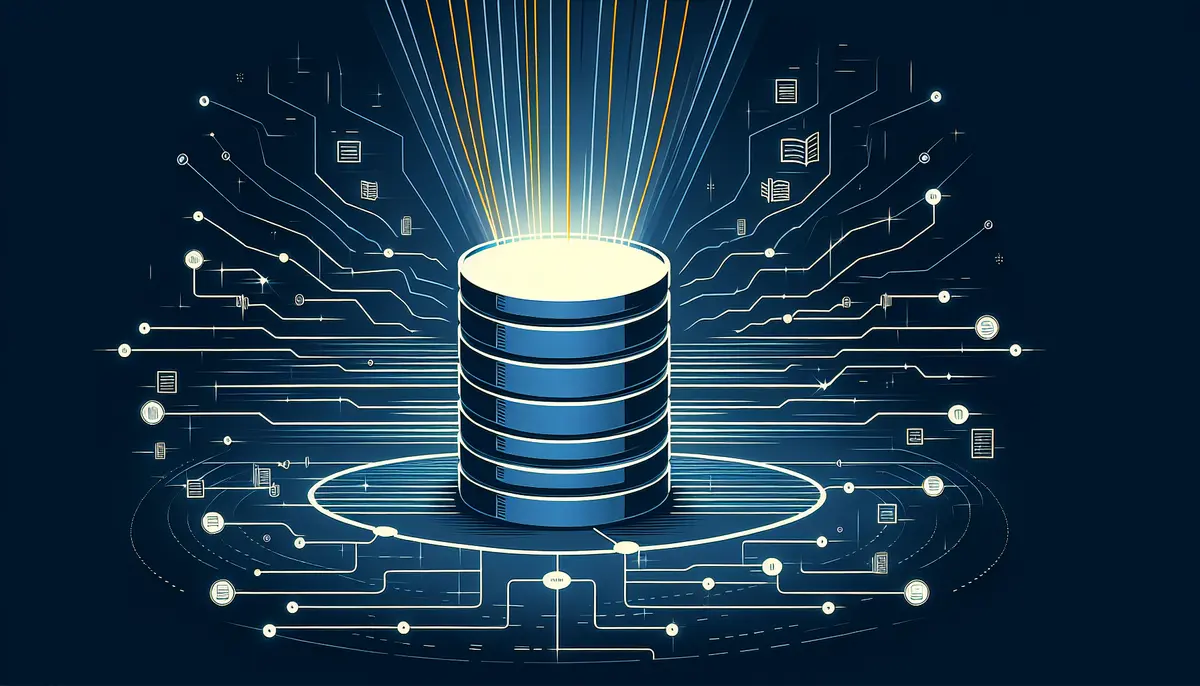
Why We Built a Single Source of Truth for Client Data
All performance data for all clients flows into one PostgreSQL database. Every number can be traced to the exact API response that produced it, and reports are reproducible at any time.

The Automation Stack: How n8n and MCP Run Our Marketing Operations
A 12-person team managing 33 clients requires significant automation. We use n8n for workflow automation and MCP for AI-assisted operations, with 240+ tools across three servers.

What Breaks at 2 AM: Why Marketing Needs Automated Infrastructure
Marketing infrastructure breaks silently. Automated monitoring catches site errors, tracking breaks, budget overruns, and broken images in hours instead of weeks.

How We Monitor 60,000 Data Points a Day
Choice OMG monitors 60,000+ data points daily through four independent pipelines feeding a centralized PostgreSQL database, creating an auditable chain from raw API response to client report.

Enhanced Meta Lead Ads Compliance Standards
Choice OMG implemented enhanced compliance standards for Meta Lead Ads in response to updated privacy and data-handling requirements.

Google Ads Advertiser Verification and Transparency Update
Google expanded advertiser verification in 2025: payer name disclosure, stricter enforcement, and pricing transparency rules.

n8n Version 2.0 Announced: What It Means for Automation Reliability
n8n 2.0 focuses on structural improvements to reliability, security, and maintainability for automation workflows.

n8n Becomes MCP-Ready: Enabling Secure AI-Driven Automation
n8n now supports Model Context Protocol, enabling secure connections between automation workflows and AI systems.

Conversational Search Is Here: Is Your Schema Ready?
Google processed over 5 trillion searches in 2025 with queries becoming longer and more conversational. Schema markup is now essential.

Q5: The Post-Christmas Revenue Window Most Businesses Ignore
87% of shopping occasions end in purchase during Q5, the Dec 26 to mid-January window when most businesses pause campaigns.

Dependency Hell Isnt Just for Developers
Marketing stacks suffer the same dependency rot as code: GTM containers full of dead tags, unpatched plugins, and third-party scripts doubling page weight.

Competitor Monitoring Without the Enterprise Price Tag
Build a competitor monitoring system using open source tools like Changedetection.io, Scrapy, and AI-powered analysis.

The End of Unlimited AI: Why Envato Retreat Signals a Market Correction
Envato slashed AI generations from unlimited to 10 per month, signaling a broader market correction for the entire SaaS industry.